Average Reviews:

(More customer reviews)I used this product for many years. I favored them for high quality ingredients, excellent flavor, reasonable price, and wide availability. I find milk and soy products cause digestive distress, rice beverages have no such effect, no cholesterol, very little fat, and taste great. I prefer the vanilla flavors of all the rice beverage milk replacers. It's sweet, if you like that.
However, Rice Dream now uses the cheaper canola oil in all their rice milk products (except a few items, like the Healthwise rice beverages). Canola oil contains erucic acid, a toxic chemical. The FDA has limited canola oil to no more than 2% erucic acid to protect our health, and do not allow it in infant formula. In addition, studies show the erucic acid it contains is toxic (see below). I have not been able to find any long term longitudinal controlled studies on humans to prove its safety as far as all the adversely affected organs.
The Healthwise Rice Dream rice beverage is much healthier, it has half the sugar, no canola oil, and plant sterols (which may reduce serum cholesterol). Good Karma Whole Grains Ricemilk is organic and also canola and sugar free. It has a thicker, richer and creamier body and flavor, less watered down. The vanilla flavor is a delicious drink, it tastes more like fresh whole milk straight out of the cow (if you have had that) than what is sold in cartons in the US. Westsoy Rice Beverage has similar consistency to Rice Dream, but is canola free.
The same canola issue (as well as added table sugar in some products) also applies to the Imagine frozen desert products.
Because there have been Internet rumors about Canola that are based on misinformation, I provide some citations of scientific papers and government publications. Studies on erucic acid in rats and piglets show heart lesions, decreased red blood cell count, and other tissue and organ damage. Erucic acid crosses the blood-brain barrier and is known to affect nerve cells. It's not safe for infants. Check out this small sample of government and peer-reviewed medical journal articles documenting my statements, available online.
United States Legislation on Low Erucic Acid Rapeseed Oil, Federal Department of Agriculture, 1985, article 184.1555, sections 3 and 4.
Growth Rate, Lipid Composition, Metabolism and Myocardial Lesions of Rats Fed Rapeseed Oils J. K. G. Kramer et al., The Journal of Nutrition, 103 (12):1696-1708, December 1973.
Dietary factors affecting the incidence of dietary fat-induced myocardial lesions. Clandinin MT, Yamashiro S., J Nutr. 1982 Apr;112(4):825-828.
Nutritional characteristics and food uses of vegetable oils, R.O. Vles and J.J. Gottenbos; In: G. Robblen, R.K. Downey and A. Ashri, Editors, Oil crops of the world, McGraw Hill, New York, USA (1989), pp. 36-86.
ERUCIC ACID IN FOOD: A Toxicological Review and Risk Assessment, TECHNICAL REPORT SERIES NO. 21, FOOD STANDARDS AUSTRALIA NEW ZEALAND, June 2003.
Uptake and metabolism of plasma-derived erucic acid by rat brain, Mikhail Y. Golovko and Eric J. Murphy, The Journal of Lipid Research, 47, 1289-1297, June 2006.
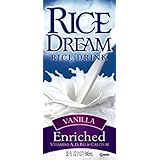
Click Here to see more reviews about: Imagine Rice Dream Drink, Enriched Vanilla, 32-Ounce Boxes (Pack of 12)


No comments:
Post a Comment